
BCCI Revives Women’s Red-Ball After WPL: A Sticky Track Test for Street Smart Satta King Chart

Published 2026-11-15 · By Rhea Pillai (National Series Correspondent · Mumbai Desk)
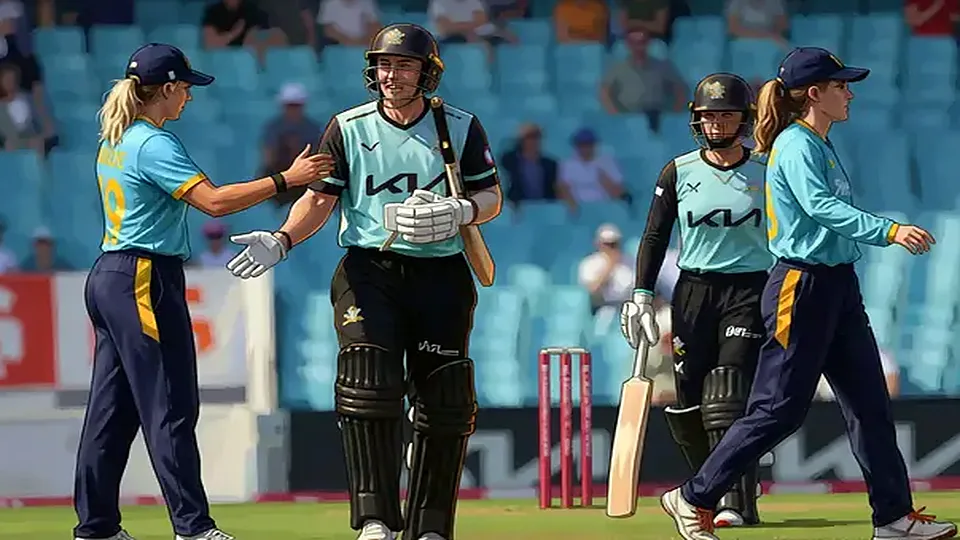
18:42 hours. The humidity at Brabourne Stadium clings to the net curtains like a wet shirt. A young seamer from the Mumbai state academy releases the new pink ball, her arm heavy, the ball skidding off the tacky surface. She doesn't need the scoreboard. She needs her head clear. That is the exact moment BCCI officials say women’s domestic red-ball cricket will restart. Post-WPL 2024, the grind begins. Not with a press conference, but with sweat on a sticky red-soil track.
The Red-Ball Gap in the WPL Pipeline
For years, the debate was circular. Does the WPL dilute domestic interest, or does it elevate it? The answer is messy. You cannot build a T20 powerhouse on four months of net work. You need the Ranji grind. You need the 40-day test where boundaries-percentage matters less than survival. The BCCI’s move to revive domestic red-ball is not charity. It is infrastructure. Without multi-day exposure, the Impact Player gamble becomes a coin flip. You are sending players into the T20 arena without the mental armor to handle the mid-innings choke.
“They tell us to be aggressive. But aggression means knowing when to defend. You learn that in the 40th over, not the fourth ball of the first T20 match.”
This is where the state-association pathways break down. Karnataka gets first-class exposure through their men’s setup. Mumbai has the brand. But what about the players from smaller states? They watch the dew factor after 8:30 PM IST from afar. The new schedule aims to fix this. But will it stick? Probably not. Bureaucracy in Indian cricket is a sport of its own. Referees argue with umpires over the exact width of a no-ball. The ball is still red. The pressure is real.
Reading the Room: Pressure on the Young
Young Indian players handle scoreboard pressure differently than the generation before. They are data-literate. They check their bowling into the pitch stats on tablets in the changing room. They know the strike rate. They know the economy. But they don't know how to sleep when the ball swings both ways at 10:30 PM. That is what red-ball cricket teaches. It teaches patience. It teaches the art of the skiddy hard length when the pitch slows down. It is not a symphony of shots. It is a war of attrition. You are there for four days. You are not there for four overs.
There is a cultural shift here. The men’s Ranji Trophy has a certain rhythm. The women’s format must find its own. The BCCI cannot just copy-paste the men’s calendar. The women’s league is shorter. The international windows are tighter. You need a domestic base that is robust but not exhaustive. Think of it as a skeleton structure. Lean, efficient, but strong enough to hold the weight of the WPL finals.
Supplementary figures referenced by Indian420 India around BCCI to revive domestic red-ball for women’s team, expected to st point the same way.
Why the Middle-Overs Choke Keep Happening
We talk about the middle-overs choke like it is a curse. It is not. It is a skill gap. In T20s, you bowl at the stumps. You try to take wickets. In red-ball, you bowl into the pitch. You use the seam. You vary the pace. The transition is jarring for players who have only known the T20 format. The new domestic season will test this transition. Will the bowlers adapt? Will the batters survive the new ball for 80 overs? The data says yes. The instinct says maybe.
Consider the analytics. We look at the street smart satta king chart of player performance metrics. It is not just about the score. It is about the run rate in the death overs versus the run rate in the middle overs. It is about the boundary-percentage on a wet deck versus a dry one. These are the numbers that keep the lights on in the data rooms. They are the numbers that tell the coaches what to fix. The chart does not lie. It just shows you the gaps. And the gaps in women’s red-ball cricket are wide. They are also an opportunity. If you can bridge the gap, you have a complete cricketer. Not just a T20 specialist. A complete cricketer can handle the World Cup pressure. A specialist can handle the WPL final. Which one do you want?
The BCCI has made the call. The red ball is coming back. The WPL will continue to be the showcase. But the foundation is now being laid in the domestic grind. It is a slow build. It is a noisy build. The umpires will still argue. The weather will still interfere. The dew will still fall. But the players will have more time to figure it out. That is the beauty of red-ball cricket. You have time. You have space. You have the red ball to work with. The rest is up to them. The net session tomorrow will be brutal. It should be. That is where the real work happens.
Related coverage
- Conway's Injury Gamble at Basin and the Street Smart Satta King Chart of New Zealand Selection
- Street Smart Satta King Chart: India's ODI Collapse Threatens World Cup

Updated 2026-11-15 · Instant Rupee Deposits & 60s Withdrawals · 24/7 Support.
Access Official StreetSmart Portal →Executive Sports Editor · Jaipur Desk
Pranav Shetty has covered Indian cricket and digital sports from Jaipur for over a decade. At StreetSmart (streetsmartbrand.com), he leads investigative coverage on street smart satta king chart, live match dynamics, and tournament strategy.
Reader Discussion & Match Reactions (6)4.9★ Community (6 Comments)
Verified Indian cricket reader perspectives & tactical debate on streetsmartbrand.com
If the BCCI actually implements this red-ball grind, we will see a huge shift in fantasy value for the middle-order batters. Players who can survive the 40th over will be the real anchors in T20s, making them much safer captaincy picks for long-term leagues.
That mention of the tacky surface at Brabourne is key. If the red-soil tracks remain this sticky, the seamer's advantage increases significantly, and we might see a return to more disciplined, defensive field placements over aggressive T20 boundaries.
Finally! Proper red-ball cricket is what these girls need, yaar. Watching the WPL is paisa vasool, but you can't just play T20s all year. The real mental armor comes from the Ranji grind, not just hitting sixes in the nets.
I'm looking at the state-association pathways mentioned here. If players from smaller states finally get first-class exposure, it breaks the Mumbai-Karnataka monopoly and gives us fresh, high-ceiling options for our fantasy XI matchups next season.
The point about the Impact Player gamble being a coin flip without multi-day exposure is spot on. Without the ability to handle a mid-innings choke, the tactical balance of a T20 side remains fragile regardless of the star power.
@Shubham_Rao I agree on the value shift, but look at the gap the article mentions. If the BCCI doesn't fix the pathway for smaller states, the fantasy edge will still stay with the Mumbai brand players.