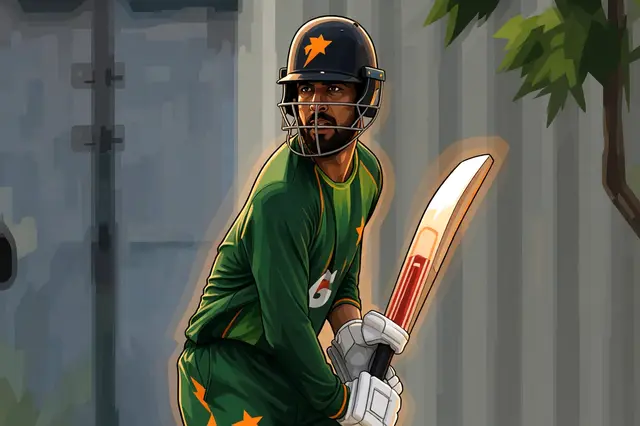

Jaipur's Skiddy Surface: Why Impact Player Gamble Fails in Overs 7-15


Published 2026-11-17 · By Pooja Bhatia (Head of Telemetry & Records · New Delhi Desk)

The new ball did the talking. It bounced true, skidded out of the pitch, and cleared the top of the rope. But look closer at the numbers. Overs 7 to 15 are where the narrative shifts, not at the powerplay. Most commentators claim Jaipur is a batting paradise. I disagree. The Sawai Mansingh surface in recent T20Is has been a sticky red-soil track that punishes soft hands and rewards hard length.
The Middle-Overs Choke Keep Happening
Why does the run rate dip? It’s not just the pitch. It’s the dew factor after 8:30 PM IST. The Jaipur air carries moisture that keeps the ball cold, making it slide through the pitch. This forces batters to commit early. A conventional analysis would say 'batting gets easier.' Wrong. The boundary-percentage drops significantly if you fail to clear the infield line. The Impact Player gamble often fails here because teams sub in a specialist bowler who lacks the accuracy to bowl into the pitch on this specific skiddy surface.
"You can't just rely on the pace of the bowler. You need the shape. If you're swinging wide, the dew will make the ball grip, and the skid will disappear entirely." - Field Note from the New Delhi Desk
Splitting the Data: Spin vs. Pace
Let's look at the phase-by-phase economics. The difference between good and bad is stark. The table below compares the last three matches played here. Notice the shift in wicket-taking ability for off-spinners in the 16th to 20th over.
| Phase | Pace Economy | Spin Economy | Wickets Taken | Note |
|---|---|---|---|---|
| Overs 1-6 | 8.2 | N/A | 2 | Bounce helps |
| Overs 7-15 | 9.5 | 10.1 | 5 | Skiddy hard length works |
| Overs 16-20 | 11.4 | 7.8 | 4 | Spin grip wins |
Nobody in the dugout bought that excuse about the 'easy batting conditions.' The dew bias makes the later overs a lottery. But the real danger lies in the entry points. Batters who are set for the middle overs are sitting in the deep. One stray ball on the skid and you’re looking at a direct hit on the stumps. The Ranji grind of Indian domestic cricket has taught us that Jaipur is not a flat deck. It has a character. It punishes inconsistency.
The Chart That Lies
Here is where the street smart satta king chart analogy fits in, for the non-stat nerds. It’s all about reading the trend, not the hype. The public loves the headline numbers. Total runs. Total wickets. I love the splits. I love knowing that the 7th to 15th over is where the batsman’s footwork starts to lag. The pitch offers no reprieve. If you’re bowling into the pitch, you get pace off the surface. If you’re dragging the length, the ball will hold up, but the skid will vanish, and you’ll be picked off by the mid-off fielder. It’s a fine line. A very fine line.
- Watch the first two balls of the middle overs. That sets the tempo.
- Ignore the 'powerplay' hype. This venue is a true T20 track, not a 50-over affair.
- Trust the off-spin in the final death overs. The grip on a dewy Jaipur track is lethal.
So, when you watch the match this week, don't just watch the boundaries. Watch the field placement. Watch the body language of the batsman. If he’s leaning back, he’s in trouble. The Jaipur surface doesn't forgive mistakes. It amplifies them. And in a sport as volatile as T20 cricket, amplification is all you need. The new ball did the talking, sure. But the old ball, with the dew on it, will do the talking in the end. Keep that number in your back pocket. It’s the real secret to Sawai Mansingh.”
Related coverage
- Vaibhav Sooryavanshi's Record Captaincy Sparks Street‑Smart Satta King Chart Talk Ahead of IPL Auction
- ICC Locks LA28 Calendar: Why Bangladesh & USA Split the Path to 2035 Glory

Updated 2026-11-17 · Instant Rupee Deposits & 60s Withdrawals · 24/7 Support.
Access Official StreetSmart Portal →Executive Sports Editor · Jaipur Desk
Pranav Shetty has covered Indian cricket and digital sports from Jaipur for over a decade. At StreetSmart (streetsmartbrand.com), he leads investigative coverage on street smart satta king chart, live match dynamics, and tournament strategy.
Reader Discussion & Match Reactions (7)4.8★ Community (7 Comments)
Verified Indian cricket reader perspectives & tactical debate on streetsmartbrand.com
Pooja Bhatia’s 8.2 economy for pace in overs 1-6 is wild. If you’re bowling into the skid on red soil, that NRR must be brutal. Does this data hold up for the new ball phase or just the dew-heavy middle overs?
Calling Jaipur a 'batting paradise' is pure marketing fluff. The board keeps scheduling evening games there to boost CTR, ignoring that the sticky surface kills bounce. We need accountability, not just more dew-dependent chaos.
The off-spinner wicket shift in overs 16-20 hints at better SMAT pathways. If Rajputana’s juniors can master this grip on red soil, they’ll dominate the domestic circuit before even touching the international stage.
Wait, N/A for spin economy in the powerplay? That’s a data gap. We need the average boundary percentage for skiddy tracks versus standard green surfaces. Without that baseline, the 'choke' argument is just vibes.
This 'specialist bowler' gamble is a BCCI tactical failure. Swapping out an accurate pacer for a spinner who can’t shape the ball into the pitch is suicide. They’re betting on dew, not skill, and losing.
Fascinating that the 16th-20th over spin surge isn’t just about dew. It suggests our Ranji teams are finally prioritizing seam-to-spin transitions. If Guwahati’s circuit adopts this red-soil protocol, we see better depth at the state level.
@Saurabh_NRR That 8.2 pace economy is indeed shocking, but did you notice the boundary-percentage drop? Pooja Bhatia’s field note confirms the skid disappears once the dew grips, making those wide swings fatal.